Duties and Responsibilities of a Ship’s Master
The profession of a ship’s captain has always been synonymous with prestige, courage, and immense accountability. It is far more than just navigating a vessel; it is a multifaceted role requiring profound expertise, exceptional leadership, and the ability to make critical decisions under constant uncertainty. As the pinnacle of the maritime hierarchy, the Master serves as a leader, navigator, administrator, and mentor, bearing sole responsibility for the safety of the vessel, the lives of everyone on board, and the security of the cargo. Understanding the nuances of this complex profession is key to analyzing ship captain salary levels, which reflect both the colossal weight of responsibility and the unique set of required competencies.
- Core Duties and Responsibilities of a Ship’s Captain
- Additional Duties of a Master
- How to Become a Ship Captain?
- How Much Does a Ship Captain Earn?
- Salaries of Deep-Sea Masters and International Vessel Captains
- How to Secure a Position as a Ship’s Master?
- The Future of the Shipmaster Profession: Challenges and Opportunities
Being a Ship Master is more than just a job title. it is a rank that signifies the highest level of accountability and professional maritime skill. Their duties extend far beyond vessel handling; they are responsible for the entirety of ship operations and overall safety.
This article will provide an in-depth look at the career path to becoming a captain, their core and secondary duties, and a comprehensive ship captain salary analysis across various segments of the global and Russian fleets, considering the future of the profession in the era of rapid digitalization.
Core Duties and Responsibilities of a Ship’s Captain
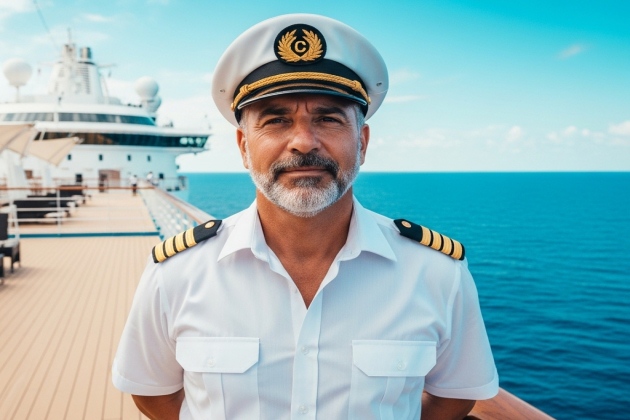
The Master holds absolute command over both the crew and the vessel, bearing full accountability for everything that transpires on board. This encompasses ensuring maritime safety, preserving the lives of all persons on board, maintaining the integrity of the cargo, and ensuring strict compliance with all applicable laws and international regulations.
Source: AI generated image
A central function of the Master is vessel maneuvering and navigation. The Master directly oversees the ship’s movement, determining its course and speed, and selecting the optimal handling methods. The Master is also responsible for monitoring the technical condition of the vessel and its equipment. This requires profound navigational expertise and the ability to effectively utilize all bridge navigation and communication systems.
Ensuring safety of navigation is the absolute priority. The Master is obligated to take all necessary measures to prevent accidents, protect the marine environment from pollution, and maintain the vessel in a seaworthy condition. This includes the systematic and precise determination of the ship’s position at sea, as well as the meticulous recording of all observations and incidents in the official logbook.
Beyond technical aspects, the Master is responsible for maintaining order and discipline on board. He oversees the conduct of the entire crew and all supernumeraries. His duties include organizing the watchkeeping service, ensuring compliance with occupational health and safety (OHS) standards, and providing adequate rest periods for crew members.
The Master also serves as the shipowner’s legal representative and the primary administrator on board. He must execute all orders from the shipowner, provided they do not conflict with safe vessel operations. Furthermore, the Master has the right to participate in crew selection, highlighting his pivotal role in team formation.
Particular focus is placed on the responsibility for cargo and passengers. The Master bears ultimate liability for cargo safety and the lives of those on board. He must ensure strict adherence to all regulations regarding the transport of passengers and goods, including maintaining accurate manifests and preventing the carriage of unauthorized persons.

Source: AI generated image
The extensive legal framework governing a Master’s duties – such as the Merchant Shipping Code and Navy Service Regulations – underscores not only the scope but also the legal severity of this responsibility. This profound legal accountability for lives, cargo, the vessel itself, and the environment is directly linked to higher compensation levels. Such a position demands not only exceptional skills but also a readiness to bear significant legal risks, distinguishing the Master from other crew members and justifying his dominant position in the maritime hierarchy.
Additional Duties of a Master
Beyond core functions, a Master performs several supplementary yet vital duties that ensure the seamless and secure operation of the vessel. The Master exercises technical oversight over documentation regarding the ship’s condition and its machinery. He is responsible for ensuring the vessel remains in a seaworthy state and for the preservation of all onboard equipment. This includes monitoring records of preventative measures against hull wear and corrosion, as well as verifying engine room logbooks and technical documentation.
In the absence of dedicated radio officers, the Master assumes personal responsibility for maintaining maritime radio communications and the technical upkeep of radio equipment.
The Master also plays a pivotal role in crew training and professional development. He is responsible for conducting technical drills, preparing the crew for damage control in emergencies, and organizing search and rescue (SAR) operations.
Source: Pixabay.com
Managing and safeguarding ship records is another critical area of the Master’s responsibility. He personally approves station bills (muster lists), monitors the accuracy of the logbook, and ensures the secure storage of all statutory ship documentation.
Finally, the Master oversees the procurement of ship supplies, with the exception of fuel, lubricants, and water (which are typically managed by the Chief Engineer). However, he must ensure that sufficient freshwater reserves are maintained on board at all times.
The necessity for a Master to take on technical and administrative tasks – which on larger vessels are usually delegated to specialized staff (such as radio officers or supercargoes) – demonstrates his versatility. This multi-skilled requirement not only increases a Master’s professional value but also significantly adds to his workload, particularly on smaller vessels with lean manning scales. The fact that a Master must be capable of performing these additional functions necessitates comprehensive training, which in turn justifies the high ship captain pay scales and makes the Master indispensable in resource-limited environments.
How to Become a Ship Captain?
The path to the ship’s helm is a long, multi-stage process requiring significant effort, time, and dedication. It involves obtaining specialized education, systematically climbing the career ladder, and continuous recertification of qualifications. The educational journey for a future Master begins with choosing a specialized maritime institution.
Source: Pixabay.com
Higher education is the primary route. Prospective captains typically enroll in universities majoring in Navigation (Deck Department). Leading maritime universities in Russia include:
- Admiral Makarov State University of Maritime and Inland Shipping (SUMIS);
- Baltic Fishing Fleet State Academy (BFFSA);
- Admiral Ushakov Maritime State University (AUMSU), among others.
To apply, candidates must pass the Unified State Exams (EGE) in Mathematics and Russian, along with one or two elective subjects such as Physics, Computer Science, Chemistry, or a Foreign Language. Upon successful completion, graduates are awarded a degree in Navigation (Specialist Level).
Alternatively, one can pursue vocational secondary education at maritime or river colleges. The duration of study in these institutions ranges from 34 to 46 months. Examples include the Kaliningrad Marine Fishing College (KMRC) and the Novosibirsk River Command School.
For captains in the fishing fleet, specialized training programs aligned with professional standards are available. These courses range from 72 to 502 hours, resulting in either a 5-year certificate or a lifetime diploma.
The maritime career ladder is a sequential accumulation of experience and rank upgrades. It is impossible to become a Master immediately after graduation. One must progress through every rank, starting as an Ordinary Seaman (OS) or cadet, then moving to Third Officer, Second Officer, and finally, Chief Officer (Chief Mate). This journey is essential for gaining practical experience, as a future Master must be capable of performing any task on board, from basic operations to complex maneuvers.
Sea time requirements are strictly regulated and depend on the vessel category. For instance, to obtain a Master’s Certificate of Competency (CoC) for unlimited voyages, a candidate typically needs 36 months of documented sea service as a Chief Mate, with at least 12 months served on deep-sea vessels. Other regulations may require 18 months of sea time as Chief Officer on sea-going vessels of 500 gross tonnage (GT) or more.
In addition to the Master’s Certificate of Competency, a comprehensive package of maritime documents and STCW certificates is required, including:
- Seafarer’s Identity Document (SID) / Discharge Book;
- Certificate of Competency (CoC) and Endorsement (renewed every 5 years);
- Radar/ARPA Simulator Training Certificate;
- Ship Security Officer (SSO) or ISPS Code certification;
- Radio Operator Certificate (as required);
- GMDSS General Operator’s Certificate and Endorsement (renewed every 5 years);
- Medical First Aid and Medical Care certificates;
- Medical Fitness Certificate (ENG1 or equivalent);
- Advanced Firefighting (Aff) Certificate;
- Proficiency in Survival Craft and Rescue Boats (PSCRB);
- Dangerous Goods (DG) Handling Certificate (if applicable);
- Proficiency in Security Awareness;
- Yellow Fever Vaccination Certificate (valid for 10 years);
- Drug and Alcohol-Free Certificate.
For specialists who have already completed their education, our website offers CES, CBT, and SETS maritime tests for online knowledge assessment, completely free of charge.
Beyond formal requirements, a Master must possess specific soft skills and professional knowledge:
- Composure and self-control;
- Strong communication skills;
- Strictness and authority;
- Attention to detail and leadership qualities.
Excellent health, a practical mindset, and the absence of seasickness or chronic conditions are mandatory. Professional knowledge must include a deep understanding of:
- Maritime and Inland Waterway Law;
- Environmental standards (MARPOL);
- Ship handling and maneuvering principles;
- Marine navigation and vessel classification.
The profession requires substantial investment. Becoming a captain demands years of education, arduous practical experience, and regular certificate renewals. These rigorous requirements create a high barrier to entry, resulting in a limited supply of highly qualified specialists. This scarcity, combined with the immense responsibility, justifies the high ship captain salaries and makes the role both prestigious and intellectually demanding.
How Much Does a Ship Captain Earn?
A ship captain’s income is among the highest in the maritime industry; however, it is subject to significant fluctuations based on a variety of criteria. A detailed ship captain salary analysis helps in understanding these variations and what defines the final pay package.
General factors influencing earning potential include:
- Vessel type: (cargo ships, passenger liners, cruise ships, tankers, bulk carriers, fishing vessels, tugboats, or small craft);
- Trading area: (inland waterways, coastal zones, deep-sea navigation, or international routes);
- Experience level: (seniority and total years in command);
- Shipping company and contract terms: (specific employer policies and individual contractual agreements).
The size of the vessel also plays a crucial role: typically, the larger the ship, the greater the responsibility and, consequently, the higher the compensation. Furthermore, performance-based bonuses and completion premiums can significantly increase a Master’s total take-home pay.
Salaries of Deep-Sea Masters and International Vessel Captains
On international vessels, the average monthly income for a Master typically ranges from $10,000 to $15,000. In certain sectors, depending on the vessel type and trading area, salaries can exceed $20,000 per month.
Cruise ship captains earn, on average, between $92,000 and $96,000 annually. With extensive experience – particularly over 20 years in command – this figure can climb to $400,000 per year, including performance bonuses and other incentives.
Source: Pixabay.com
Interestingly, the Master is not always the highest-paid crew member on a cruise liner. A Chief Engineer or Hotel Director may occasionally command a higher salary. This is because modern cruise ships rely heavily on complex engineering infrastructure and a high-revenue hospitality business. Managing these specialized departments requires unique competencies that are highly valued, especially as navigation becomes increasingly automated.
In the tanker sector, Masters of LPG carriers can earn up to $14,500 per month, while those commanding Very Large Crude Carriers (VLCC) typically see ranges from $12,650 to $14,650 per month. In the dry cargo segment, the starting pay for a Master on a general cargo vessel may be around €4,300, whereas on bulk carriers, it usually falls between $8,500 and $9,000. In Russia, vacancies for tugboat captains in the Black Sea and Sea of Azov offer a starting salary of 266,000 RUB for the first voyage, increasing to 380,000 RUB for subsequent contracts.
The table below illustrates how vessel type and geography impact a Master’s earnings. For instance, captains on international tankers and cruise ships earn significantly more than those on inland waterway vessels in Russia. This data highlights which maritime sectors offer the highest earning potential.
| Master Salary Ranges by Vessel Type and Region (International Data) | ||
|---|---|---|
| Vessel type | Region/Type of sailing | Monthly salary range (USD) |
| Cruise Ship | International | $7,600 – $33,300 (annual $92,000 – $400,000) |
| Tanker | International | $12 650 – $14 650 |
| Dry Cargo/Bulk Carrier | International | $4 300 – $9 000 |
| Gas carrier | International | $14 500 |
Salaries vary drastically based on the region and vessel type. The gap between Russian inland/coastal shipping and international deep-sea voyages is particularly striking. This underscores that the maritime labor market is global, with international pay standards significantly exceeding local benchmarks. See the full salary breakdown by job role and vessel type here.
How to Secure a Position as a Ship’s Master?
Finding employment as a Master requires a strategic understanding of the current maritime labor market, effective recruitment channels, and the evolving prospects of the shipping industry.
Current job openings and candidate requirements reveal a broad spectrum of opportunities. Vacancies for Masters include positions on:
- Tugboats and workboats;
- Small craft and pleasure vessels;
- Dry cargo ships;
- Luxury yachts;
- Passenger vessels and river cruisers.
Experience requirements vary significantly: from “entry-level” for certain small craft to over five years of command experience for large vessels or specialized operations, such as tugboat handling with specific propulsion systems (e. g., ASD or Z-drive). A mandatory prerequisite for employment is a valid set of documents, including a Master’s Certificate of Competency (CoC), a GMDSS operator’s license, and up-to-date medical certificates. Working conditions are diverse, ranging from rotation cycles (e. g., 30/30, 60/30, or 90/30 days on/off) to shift-based or fixed schedules, with salaries typically paid bi-weekly or monthly.
The role of crewing agencies and direct contact with shipowners is pivotal in the hiring process. Agencies such as:
- Sea Career;
- Jobmarineman;
- Seajobs.
These firms act as primary intermediaries between seafarers and employers, offering a wide array of vacancies across various vessel types worldwide. However, it is worth noting that salaries in the merchant and tanker fleets can often be higher if mariners contact the shipowners’ HR departments directly, bypassing intermediaries.
The future of the maritime industry and the impact of automation on the Master’s profession are critical considerations for both aspiring and seasoned specialists.
Russia plans to significantly increase vessel production by 2030 and invest in port infrastructure, which will drive the demand for qualified maritime personnel, including Masters, and create favorable conditions for the domestic labor market. Simultaneously, maritime automation, including autonomous navigation, aims to enhance efficiency and minimize the “human factor,” which accounts for approximately 80 % of maritime incidents. Despite active trials of autonomous ships (MASS), the profession of the Master will not disappear; it will transform.
The focus is shifting toward high-level decision-making in complex scenarios, managing automated systems, and human-centric leadership. The Master’s role remains invaluable, as the demand for navigators is sustained by globalization, the increasing complexity of operations, and the constant need for analytical and communication skills.
Despite technological advancements, the position of Master will remain essential and highly sought after, requiring continuous adaptation and the development of new competencies.
The Future of the Shipmaster Profession: Challenges and Opportunities
The profession of a ship’s Master remains one of the most prestigious and responsible roles in the world, demanding extensive knowledge, years of experience, and exceptional leadership. These requirements are directly reflected in the high – though significantly varied – salaries, particularly on international routes and large vessels. The income gap between domestic and international fleets underscores the global nature of the maritime labor market and the influence of economic factors on compensation levels.
Source: Pixabay.com
Despite the rapid development of automation and autonomous vessels, the future of the Master’s profession points not toward disappearance, but transformation. The role will evolve from direct manual ship handling to strategic oversight, remote monitoring, and high-level decision-making in critical scenarios. The ability to effectively manage complex technological systems, analyze data, and, most importantly, maintain composure and make correct decisions under uncertainty or in emergencies will remain indispensable. While the “human factor” is often cited in incidents, it is also the key element in preventing catastrophes and adapting to unpredictable maritime conditions.
Significant investments in the development of the Russian maritime and river fleets are creating favorable conditions for the growth of the domestic labor market. This shift potentially narrows the gap with international pay scales and offers new maritime career growth opportunities. Consequently, despite technological shifts, the Master’s profession will retain its strategic importance, requiring specialists to continuously adapt and develop new competencies.
Ultimately, the role of the Master will continue to be one of the most prestigious and highest-paying positions in the maritime industry. For driven and capable specialists willing to engage in lifelong learning and meet the challenges of tomorrow, the profession offers substantial career and financial prospects, ensuring that ship captain pay scales remain at the top of the industry.