Motorman Profession: Duties, Qualifications, and Career Path
A Motorman is a key technical specialist whose work directly determines a vessel’s operational efficiency and safety. As an essential member of the engine room crew, the Motorman ensures the seamless functioning of all machinery and systems below deck.
This is a demanding and responsible role that requires high discipline, keen attention to detail, and the ability to operate in high-risk environments. With the continuous evolution of shipbuilding technology, this profession remains in high demand, necessitating ongoing training and professional development.
Core Duties of a Motorman
A motorman’s work is primarily centered within the engine room. Their principal responsibility is the operation and maintenance of marine engines and auxiliary machinery. The motorman closely monitors the Main Engine’s (ME) key performance parameters, including:
- Lube oil pressure.
- Coolant temperature.
- Engine RPM and other critical technical indicators.
Any deviations from standard operating parameters must be promptly reported to the Officer in Charge of the Engineering Watch (OICEW) or the Chief Engineer. When necessary, the motorman assists in troubleshooting and rectifying malfunctions. The scope of a motorman’s responsibility also extends to auxiliary equipment maintenance, which is vital for modern vessel operations. This includes:
- Fuel, oil, and water transfer pumps.
- Air compressors providing compressed air supply.
- Fuel and lube oil purifiers (separators).
A marine motorman performs regular preventative maintenance (PM) and routine inspections:
- Checking fluid levels.
- Replacing filters.
- Cleaning heat exchangers and inspecting seals and gaskets.
These routine yet mission-critical tasks prevent mid-voyage breakdowns. Additionally, the motorman carries out minor repairs and participates in complex overhauls under the supervision of senior engineers. Proficiency with hand tools and power equipment is essential, as is the ability to perform component wear diagnostics (defectoscopy) and mechanism adjustments. Furthermore, the motorman is required to maintain the Engine Room Logbook and other technical documentation, meticulously recording all actions, inspections, and repairs.
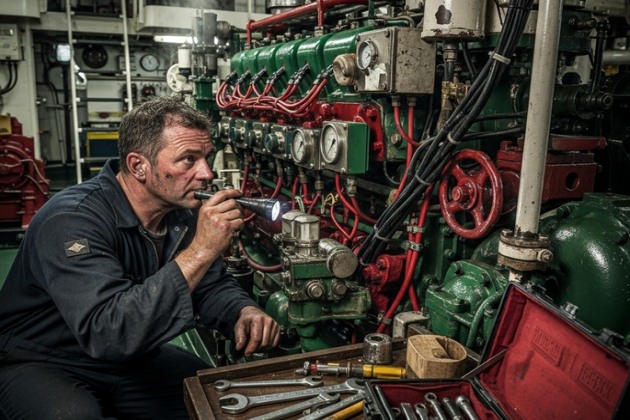
Source: AI generated image
This ensures a transparent and accurate record of the engine room’s condition, which is vital for safety audits and incident investigations. The most critical aspect of the job is strict adherence to Health, Safety, and Environment (HSE) regulations. The engine room is a high-risk zone characterized by high temperatures, moving machinery, and hazardous chemicals. A motorman must always utilize Personal Protective Equipment (PPE) and follow safety protocols to prevent workplace injuries.
How to Become a Motorman: Education and STCW Certification
To become a ship’s motorman, one must obtain the appropriate education and professional credentials. The career path typically begins with vocational training at maritime colleges or nautical academies. The curriculum includes both theoretical and practical coursework covering marine engine design, auxiliary machinery, and shipboard electrical systems.
In addition to a diploma, a Certificate of Competency (CoC) is required to work legally. This is issued only after completing a specific amount of sea service (sea time) and passing qualification exams. Furthermore, mandatory safety certifications are required, including Basic Safety Training (BST), environmental protection (MARPOL compliance), and advanced firefighting. All maritime certificates have an expiration date and require periodic revalidation.
Practical experience is a decisive factor in becoming a professional. Educational institutions include mandatory sea phases where cadets gain hands-on experience and acclimate to the specifics of maritime life. Upon graduation, a candidate typically starts as an Ordinary Motorman (Motorman 2nd Class) and can only apply for promotion to Able Seafarer Engine (Motorman 1st Class) after accumulating sufficient sea time.
What STCW certificates are mandatory for a Motorman?
To ensure STCW compliance, a Motorman must possess several critical documents. Beyond the basic Certificate of Proficiency, mandatory requirements include Basic Safety Training (BST) – covering firefighting and life-saving appliances – and Security Awareness training. Most importantly, a Motorman requires a Watchkeeping Certificate (III/4) or an Able Seafarer Engine (III/5) certificate, along with a valid Medical Fitness Certificate (ENG1 or equivalent) and MARPOL awareness training for environmental protection.
Working Conditions and Challenges
A motorman’s work has unique characteristics, primarily defined by the watchkeeping system. The standard rotation is usually “4 hours on, 8 hours off”. This schedule demands high discipline and the ability to adapt to a shifting sleep-wake cycle. However, while in port or during emergency situations, the schedule may change, and overtime is considered a standard part of the profession.
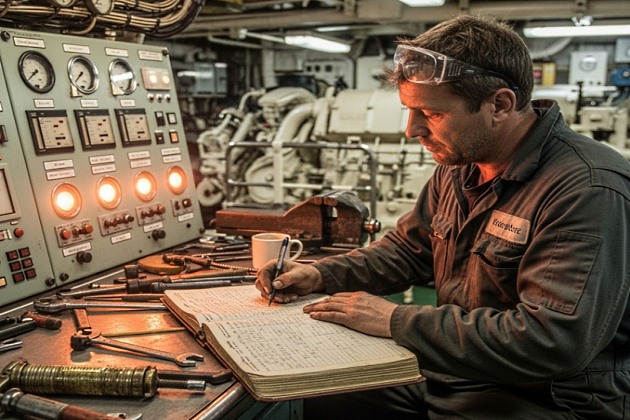
Source: AI generated image
Life within confined spaces and long-term contracts (ranging from several weeks to several months) creates significant psychological demands. Mariners live in small cabins, away from family and friends, which requires the ability to work in a tight-knit team, resolve conflicts effectively, and maintain a professional atmosphere.
Physical and psychological stress are inherent to the role. The engine room environment is characterized by high noise levels, extreme heat, and constant vibration. The motorman often performs physically demanding labor, requiring excellent fitness. Psychological pressure is also present due to the high level of responsibility for expensive equipment and the constant readiness required for emergency response.
Motorman Salary 2026: How Much Do Engine Ratings Earn?
A motorman’s salary is influenced by several variables, including vessel type, trading area, and the individual’s level of experience and certification.
In the maritime industry, a motorman is a dedicated engine room rating responsible for the day-to-day operation and maintenance of the ship’s power plant. While the term “motorman” is universal, it specifically refers to experts working with reciprocating internal combustion engines.
Average Salary Overview: The monthly earnings for a Motorman/Oiler vary significantly across different vessel segments:
- LPG/LNG Carriers: $1,850 – $2,960
- Chemical Tankers: $1,750 – $2,500
- Ro-Ro Vessels: $1,500
- Reefer Ships: $1,350 (for 1st Class/Able Seafarer)
- Tugs: $1,300
- General Cargo/Dry Bulk: $1,200
Specialized roles, such as the Pumpman (Donkerman) – who manages cargo systems and pumping operations on tankers – command higher rates, typically earning between $2,000 and $3,500 depending on the vessel type (Oil vs. Chemical).
What is the difference between a Motorman and an Oiler?
While both roles belong to the engine room complement, the difference usually lies in the level of certification and specific vessel traditions. Technically, an Oiler is often an entry-level position focused on manual lubrication and basic cleaning. In contrast, a Motorman typically holds an Able Seafarer Engine endorsement, implying higher technical proficiency in maintaining reciprocating machinery and assisting in complex overhauls. On many modern merchant vessels, these terms are used interchangeably under the general category of Engine Ratings.
Unlock the full earning potential: Explore our comprehensive guide to bonuses and financial growth across different vessel types.
Career Path: From Motorman to Chief Engineer
The motorman profession offers a transparent and rewarding career ladder. Rather than a dead-end job, it serves as the foundational step toward senior engineering officer roles. The typical career progression is as follows:
- Motorman (Ordinary/Able Seafarer Engine): The entry point where seafarers accumulate the necessary sea time to qualify for officer-level examinations.
- Third Engineer (Junior Engineer): Transitioning to an officer role requires approximately 12 months of sea service as a rating and passing the OICEW (Officer in Charge of an Engineering Watch) exams. This role involves increased responsibility for specific machinery and the right to stand independent watches.
- Second Engineer (First Assistant Engineer): Usually requires an additional 18 months of sea time as a 3rd Engineer. The Second Engineer is responsible for the main propulsion unit and overseeing all daily maintenance activities in the engine room.
- Chief Engineer: The pinnacle of the engineering department. Reaching this rank typically takes 7 to 10 years. The Chief Engineer manages the entire technical department and bears full responsibility for the vessel’s mechanical integrity and safety.
Continuous professional development, securing advanced STCW endorsements, and upgrading ratings are essential for staying competitive and maximizing earning potential in the global maritime market.
Ready to take the first step toward a successful career of motorman at sea?
- Post your seafarer resume to become visible to leading shipowners and recruitment agencies worldwide.
- Explore the latest maritime vacancies from top-tier shipping companies and find the contract that matches your skills and expectations.
Is a motorman an officer or a rating?
In the maritime hierarchy, a motorman is classified as a Rating, not an officer. They are skilled technical staff who support the Engineering Officers (such as the Second or Chief Engineer). While they are not part of the management or operational level leadership, experienced motormen often serve as the “backbone” of the engine room, and this position is the essential prerequisite for eventually pursuing an officer’s license through further sea service and examination.
Conclusion
The role of a motorman is one of the most critical and high-responsibility positions within the maritime industry. It demands a unique combination of profound technical expertise, physical endurance, and unwavering discipline. A marine motorman is the specialist who ensures the operational heartbeat of a vessel; without their skill, the seamless functioning, safety, and efficiency of modern ship machinery would be impossible to maintain.
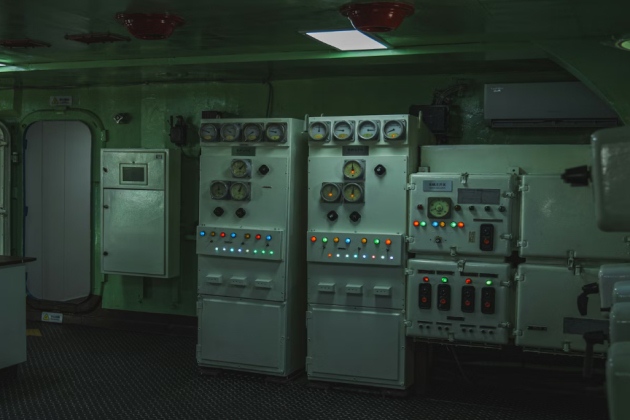
Source: Unsplash.com
Despite the inherent challenges – such as the rigorous environment of the engine room and the complexity of modern propulsion systems – the profession remains in high demand globally. The clearly defined career trajectory and the potential for significant professional growth make it an exceptionally attractive choice for those seeking a stable, technically challenging, and rewarding career at sea.