3rd Engineer Duties and Responsibilities of Shipboard
The position of a 3rd Engineer is less of a career milestone and more of the first frontier of legal and technical accountability within the engine room hierarchy. It marks the transition from a trainee (cadet) to a licensed officer whose decisions and actions carry direct legal and financial implications for the vessel and the shipping company.
- Watchkeeping Duties and the Documentary Basis of the Job
- Hierarchy, Command, and Mandatory Qualifications
- 3rd Engineer Salary on Ships
- Watchkeeping Specifics
- Handover Procedure (Taking Over the Watch/Department)
- Technical Assignment and Practical Maintenance Risks
- Auxiliary Engines (GenSets)
- Compressed Air Systems
- Purifiers (Separators)
- Other Assigned Machinery
- Fuel Management, Ecology, and Documentation
- Bunkering and Fuel Preparation
- Environmental Compliance and the ORB
- OWS Operation (Oily Water Separator)
- Emergency Readiness and Professional Pragmatism
- Conclusion
Common metaphors describing the 3rd Engineer as the “hands and feet” of the machinery often miss the core point: the 3rd Engineer is an Officer of the Watch (OOW). They hold personal responsibility for the condition of the machinery under their charge, as well as for strict adherence to environmental protocols and the rigorous maintenance of technical documentation.
Watchkeeping Duties and the Documentary Basis of the Job
The successful performance of a 3rd Engineer’s duties begins and ends with meticulous record-keeping and a clear understanding of watchkeeping protocols, rather than a simple “walk-around” of the machinery.
Hierarchy, Command, and Mandatory Qualifications
Functionally, the 3rd Engineer reports to the 2nd Engineer, who is responsible for the operational management of the Engine Room (ER), and ultimately to the Chief Engineer. Qualification is more than just holding a Class 3 Marine Engineer Officer (MEO) Certificate of Competency (CoC) and the required sea time. While that provides formal clearance, real-world competence is a complex skill set: the ability to make decisions within three to five minutes of a critical alarm sounding in the absence of senior officers; the ability to justify one’s actions to a PSC (Port State Control) inspector by citing specific manual sections or conventions; and the ability to build an evidentiary trail of one’s work through flawless Log Book maintenance. Without these components, a license is not verified.
3rd Engineer Salary on Ships
The 3rd Engineer’s salary is a starting yet vital rung on the engine room career ladder, and its scale varies significantly based on several key factors. Generally, the monthly income of a 3rd Engineer on merchant vessels ranges from $2,500 to $6,000 USD; however, this figure represents an industry average. Detailed salary breakdowns for 3rd Engineers across different vessel types can be reviewed here.
Source: Pixabay.com
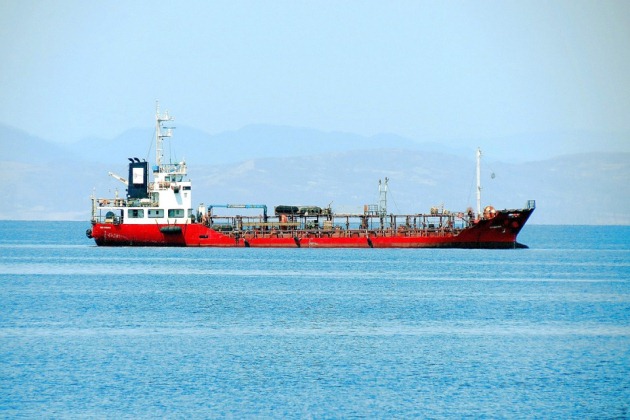
The most significant factor is the vessel type. Traditionally, the highest rates are offered by tankers (especially LNG/LPG Tankers and Chemical Tankers) due to the hazardous nature of the cargo and stricter crew requirements. In these sectors, income can reach or exceed $5,000 USD. Meanwhile, on Bulk Carriers and Container Ships, the average salary typically falls between $3,300 and $4,500 USD.
Watchkeeping Specifics
The standard 4-8 watch schedule (04:00 – 08:00 and 16:00 – 20:00) is when the 3rd Engineer officially assumes command responsibility for the engine room. A watch is not a stroll; it is a continuous process of monitoring and risk assessment. Watch priorities are strictly categorized: the primary task is monitoring load stability and checking the gensets. Any drop in parameters – such as low lube oil pressure or rising exhaust gas temperatures – must be immediately logged and reported, as ignoring these signs leads to a Black Out. Simultaneously, the readiness of the Main Engine (ME) and its supporting systems must be constantly monitored. The 3rd Engineer is tasked with maintaining critical auxiliary systems: monitoring starting air pressure, ensuring the correct operation of purifiers (separators), and eliminating fuel system leaks, which are potential fire hazards.
Ready to take the first step toward a successful career of 3rd Engineer at sea?
- Post your seafarer resume to become visible to leading shipowners and recruitment agencies worldwide.
- Explore the latest maritime vacancies from top-tier shipping companies and find the contract that matches your skills and expectations.
On UMS (Unmanned Machinery Space) vessels, the responsibility of the “Duty Engineer” (often the 3rd) increases exponentially. UMS does not mean machinery doesn’t break; it means the engineer on standby must be able to react instantly. In an emergency, the biggest mistake is attempting to solve a serious problem alone without reporting. The protocol must always be: Identification – Isolation (if possible) – Report to 2nd/Chief Engineer – Joint Decision Making.
Handover Procedure (Taking Over the Watch/Department)
The handover process is the transfer of legal liability for the assigned machinery and documentation; therefore, skepticism is mandatory, and the incoming engineer must act like an auditor. The audit begins with a technical inspection: it should not be superficial. One must check the physical state of the auxiliary engines, compressors, and purifiers, and request the last 48 hours of operational logs to ensure parameters were normal, looking specifically for “temporary patches” or unauthorized repairs.
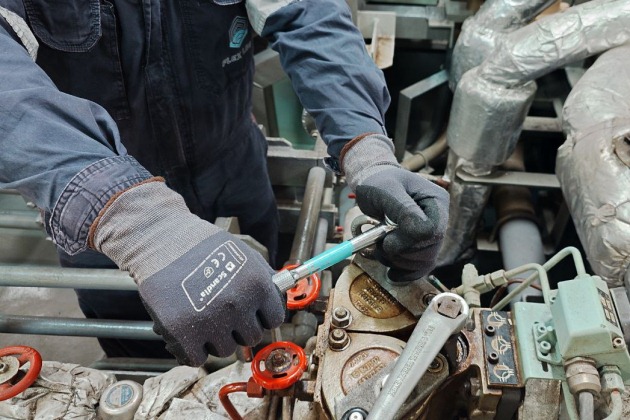
Next, an inventory of critical spare parts (inventory check) and tools is conducted. In maritime practice, missing parts like a spare plunger for an auxiliary engine can jeopardize vessel safety. The handover concludes with an actual sounding of fuel and oil tanks. Accepting “by the books” without a physical measurement means taking responsibility for any potential shortage. Any discrepancies found must be recorded in the Handover Report (Act of Transfer), as this document is your primary evidence that you accepted the machinery in a specific, recorded condition.
Technical Assignment and Practical Maintenance Risks
The 3rd Engineer’s assignment covers a complex array of machinery that demands strict adherence to technical manuals, even under constant pressure to complete repairs quickly.
Auxiliary Engines (GenSets)
The Auxiliary Engines (GenSets) are the most critical part of the assignment, as their failure leads to a complete loss of power and propulsion (Blackout). Ideally, the 3rd Engineer should perform regular planned maintenance (PMS) every 500 – 1,000 hours. In practice, due to time constraints, work often boils down to injector replacement and valve cleaning. It is vital to resist pressure and not skip the following checks:
- Fuel Injection Timing: Incorrect timing leads to excessive fuel consumption, high wear, and, most dangerously, thermal overloading of the cylinder.
- Turbocharger Maintenance: A fouled turbocharger reduces power and increases thermal stress. Blade cleaning and bearing inspections are not “cosmetic” tasks but operational necessities.
Any fault analysis – whether it’s rising Exhaust Gas Temperature (EGT), increased load, or unusual noise – is a mandate to immediately take the generator off-load for inspection before catastrophic failure occurs.
Compressed Air Systems
The compressed air system is vital not only for Main Engine starting but also for all pneumatic automation. Air compressors (main and emergency) are high-risk machinery due to explosion hazards. The accumulation of oil in the system or air receivers, combined with high compression temperatures, can lead to a receiver or high-pressure line explosion. Prevention involves three mandatory steps:
- Regular Condensate Drainage: Water causes corrosion and exacerbates the risk of oil mist formation in air receivers.
- Compressor Valve Overhaul: Cleaning and lapping valves is essential, as leakage causes overheating and carbon/oil deposit buildup.
- Air Dryer Maintenance: Moisture is the primary cause of corrosion in pneumatic control systems; keeping dryers functional is non-negotiable.
Purifiers (Separators)
Purifiers and Clarifiers protect the engines from water and particulate matter in the fuel. Inefficient operation leads to rapid wear of fuel injection equipment and the cylinder-piston group. The gravity disc (sealing ring) selection is not an “approximate” process; it must strictly match the density of the specific fuel batch and the separation temperature.
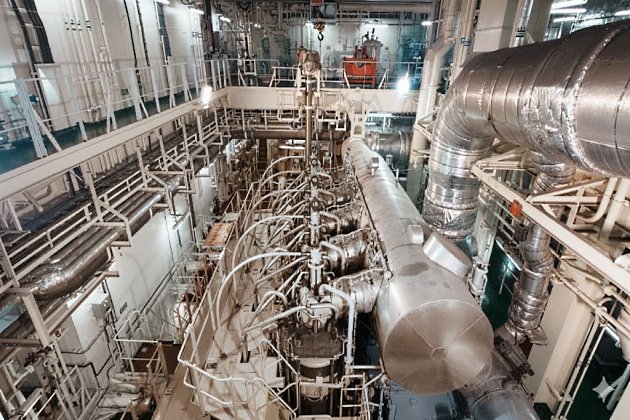
An error here leads to either poor purification or “losing the seal“, resulting in fuel/oil being discharged with the sludge. Additionally, fuel must be separated at a temperature that ensures a viscosity of 10-15 cSt for maximum efficiency.
Other Assigned Machinery
Beyond the main systems, the 3rd Engineer is responsible for all centrifugal pumps (ballast, fire, and bilge). A fire pump failure in a crisis carries potential criminal liability. Responsibility also extends to the mechanical components of deck machinery (winches and windlasses). Finally, the lifeboat engine must be in a state of immediate readiness. This requires regular test runs, level checks, and battery charging. Falsifying lifeboat engine start logs is a major non-conformity easily detected by inspectors.
Fuel Management, Ecology, and Documentation
The 3rd Engineer is the primary executor in the two areas most rigorously inspected by Port State Control (PSC): fuel management and environmental compliance. All efforts in this department boil down to one thing: documentary evidence of compliance.
Bunkering and Fuel Preparation
Fuel management involves massive financial assets, making it prone to risks and potential manipulation. During bunkering operations, the 3rd Engineer must not only enforce safety measures (leak checks, fire hazard prevention) but also maintain a critical eye on the measurement process. Monitoring flow rates, temperature, and performing physical tank soundings is the only defense against “short delivery” or supplier fraud. Furthermore, fuel samples (drip samples) must be drawn continuously throughout the entire process for laboratory analysis.
The primary risks in storage and preparation involve fuel compatibility. When transferring fuel from settling to service tanks, mixing incompatible grades must be strictly avoided to prevent asphaltene sludge precipitation, which can clog purifiers and filters instantly. Maintaining the correct fuel pre-heating temperature is equally critical: under-heated fuel with high viscosity will damage high-pressure fuel pumps, while overheating leads to carbon deposits on fuel injectors.
Environmental Compliance and the ORB
The MARPOL Convention is not a set of guidelines; it is international law. Violations of Annex I (Oil) or Annex V (Garbage) result in vessel arrest, astronomical fines, and potentially criminal charges for the Chief Engineer and Master.
The Oil Record Book (ORB) serves as the sole legal document proving the legitimacy of operations. It demands flawless record-keeping: every operation – bunkering, separation, bilge water discharge via OWS, or sludge transfer – must be logged with absolute precision, including coordinates, time, and volume. PSC inspectors begin their audits with the ORB, looking for discrepancies between generated bilge water, fuel consumption, and discharge logs. Any negligence in the entries is immediately interpreted as an attempt at falsification.
OWS Operation (Oily Water Separator)
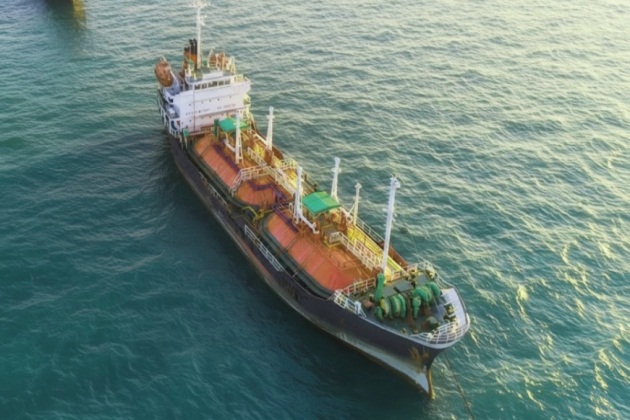
The Oily Water Separator (OWS) is the piece of equipment PSC scrutinizes most heavily, as it is directly linked to sea discharge. The mandatory requirement for an OWS is to treat bilge water to an oil content of no more than 15 parts per million (15 ppm). This is an absolute, non-negotiable standard for which the 3rd Engineer is held accountable.
Source: Unsplash.com
The engineer must maintain “professional skepticism” toward the 15 ppm monitor, a complex and often temperamental instrument. A monitor malfunction, sensor fouling, or incorrect calibration can lead to the OWS discharging contaminated water without triggering an alarm.
One must remember the absolute prohibition of OWS bypasses (often referred to as “magic pipes“). This is a criminal offense. In the event of an OWS failure, the 3rd Engineer is duty-bound to immediately cease discharge and transfer the bilge water to a holding tank for storage.
Emergency Readiness and Professional Pragmatism
In the high-stakes environment of a vessel’s engine room, technical knowledge must be matched by decisive action. The transition from routine operations to crisis management defines the true caliber of a marine officer.
Emergency Procedures
In any emergency, automation ceases to be a helper and becomes part of the problem; therefore, an engineer of any level must be able to operate without it. The Blackout Recovery (Black Start) procedure – the total loss of shipboard power – is the worst-case scenario. A 3rd Engineer must know this protocol by heart, without relying on control panels.
The sequence remains constant: the first step is the manual start of the Emergency Generator (EDG) (via hydraulic, spring, or battery start) to immediately restore power to the Emergency Switchboard (ESB). Next, cooling and lube oil pumps must be manually started to prepare one of the main Auxiliary Engines. Only then can the primary power be restored. Knowing the location of every manual valve, every manual starting device, and the layout of electrical bus-ties is a requirement for vessel survival. Regular emergency drills should be viewed as a personal competency test.
Role in Other Emergency Drills
Beyond blackout recovery, the 3rd Engineer is typically a key member of the Fire Party. This requires not only knowing one’s station but also being proficient in the use of SCBA (Self-Contained Breathing Apparatus) and emergency fire pumps. Similarly, during flooding (bilge) emergencies, their task is the rapid deployment of bilge systems and leak localization; every minute of delay increases the risk of vessel loss.
Career Growth and Perspectives
The path to becoming a 2nd Engineer requires more than just “putting in the time.” It demands documented proficiency that extends beyond one’s immediate assignment. A future 2nd Engineer must possess an in-depth understanding of the Main Engine (ME), boiler plants, and CO2 fixed fire-extinguishing systems. A proactive 3rd Engineer should actively participate in ME overhauls and study the relevant technical manuals.
Source: Unsplash.com
Furthermore, fluency in Maritime Technical English is not an advantage – it is a mandatory requirement for communicating with surveyors, inspectors, and multinational crews. The promotion to 2nd Engineer is a transition to personnel management (motormen, fitters). The true test is the ability to make tough, justified decisions and maintain composure under extreme pressure.
Conclusion
A 3rd Engineer daily navigates the space between strict technical documentation and the unpredictable nature of machinery, ensuring compliance with Class Society standards while meeting the Chief’s performance targets.
This position demands more than just wrench-turning skills; it requires documentary discipline and critical thinking. Your signature in any logbook is a legal testimony. Ensuring the uninterrupted operation of auxiliary systems is expected, but MARPOL compliance and maintaining flawless documentation are your primary defenses against PSC inspections, audits, and legal liabilities. Master your assignment thoroughly, but always remain a skeptic and an auditor of your own work.